
LIsa Black
Cape Coral, FL
Female, 49


I spent the five happiest years of my life in a morgue. As a forensic scientist in the Cleveland coroner’s office I analyzed gunshot residue on hands and clothing, hairs, fibers, paint, glass, DNA, blood and many other forms of trace evidence, as well as crime scenes. Now I'm a certified latent print examiner and CSI for a police department in Florida. I also write a series of forensic suspense novels, turning the day job into fiction. My books have been translated into six languages.
That entirely depends on where you want to work. Each lab has its own requirements. My first job wanted a bachelor’s degree in any natural science. My current job just requires a HS diploma, but it helps to have advanced degrees so we all have at least a B.S. There is no uniform job definition or title for forensic work--your title is whatever your boss says it is, and crime labs can be a small place that only tests drugs and fingerprints or a large, full service place that does everything from questioned documents to DNA.
Share Answer: 

You can say that this blood came from this person. But you have to have a DNA sample from that person to compare it to. (A swab from inside the mouth is fine, it doesn't need to be blood.) or they need to be already in the DNA database.
Share Answer: 
I'm sorry, I wrote a whole answer to this but somehow it didn't post. It may, depending upon how much different from real blood the fake is, for instance if it's significantly more or less dense. But in terms of fluid characteristics it may not change it enough to even be noticeable or make much of a difference in the final analysis.
Share Answer: 
Sure I'll catch you when I'm back at work tomorrow.
Share Answer: 
Sushi Chef
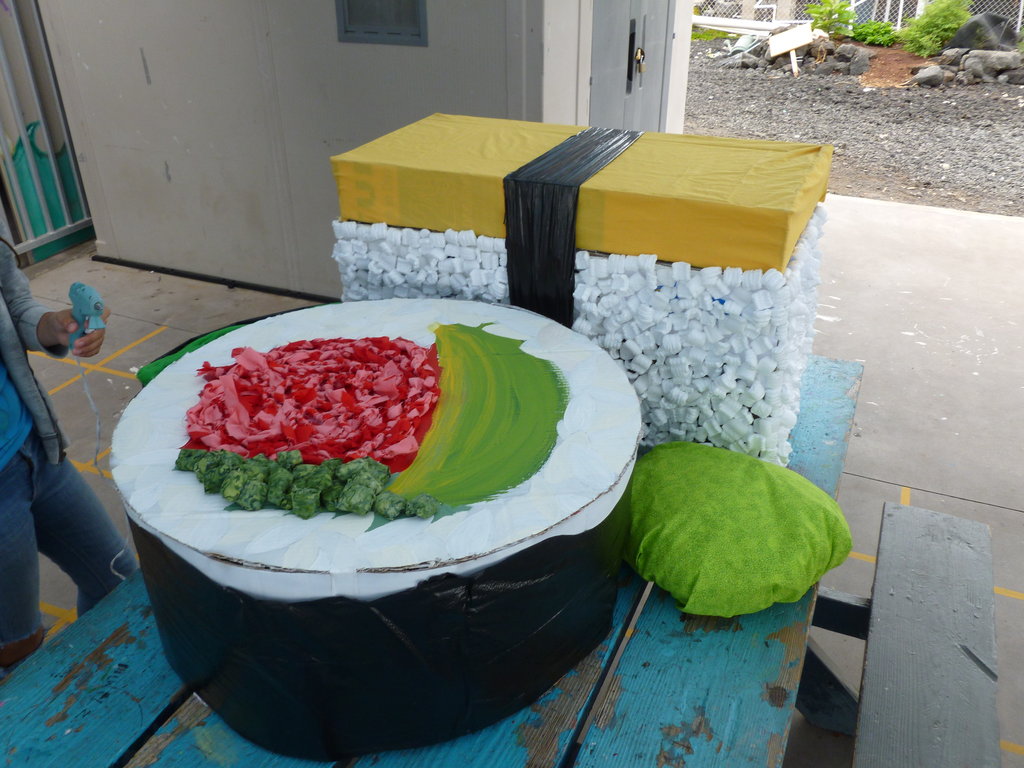 Is there THAT much difference in quality between the fish served at mid-range vs high-end places?
Football Official
 Were the replacement refs actually worse than the regular refs?
Flight Attendant
 What's the scariest flight you've ever been on?
Okay, so if I'm following this:The pathologist says he sent the hyoid to the forensic lab.The forensic lab says it didn't receive it. The pathologist report says the hyoid was intact.
It seems to me that the 2nd and 3rd statements contradict the first, and since as far as I know pathologists and not labs examine hyoid bones, my guess is that the first statement is an error, either a typo or a misstatement and the bone was never sent to the lab. The only way to know for sure is to ask the pathologist. Just call the ME or coroner's office and ask for an appointment to come in or to phone in order to ask that pathologist a few questions about the report. Such offices are usually very careful to make a family comfortable so I'm sure they will be willing to address your concerns. Best of luck!
Share Answer: 
We work 40 hours a week plus overtime when needed.Right now I'm on four 10's but I was on 12 hour rotating shifts, 6 am to 6 pm, and will be going back to that next year. I liked that schedule.
Share Answer: 
I'm sorry, I answered this a week ago but somehow it didn't post. A pathologist will usually estimate time of death during the autopsy. It can be very simple and require the body temperature and not much more, or it can be very difficult and cover a wide range of possible time, especially if a lot of time has elapsed since death. The more time, the harder it gets.
Share Answer: 
-OR-
 Login with Facebook
 (max 20 characters - letters, numbers, and underscores only. Note that your username is private, and you have the option to choose an alias when asking questions or hosting a Q&A.)
(A valid e-mail address is required. Your e-mail will not be shared with anyone.)
(min 5 characters)
By checking this box, you acknowledge that you have read and agree to Jobstr.com’s Terms and Privacy Policy.
-OR-
Register with Facebook(Don't worry: you'll be able to choose an alias when asking questions or hosting a Q&A.)



 Browse Jobs
 Host a Q&A
 Search

 Submit Your Question
 Host a Q&A
 Last 7

