
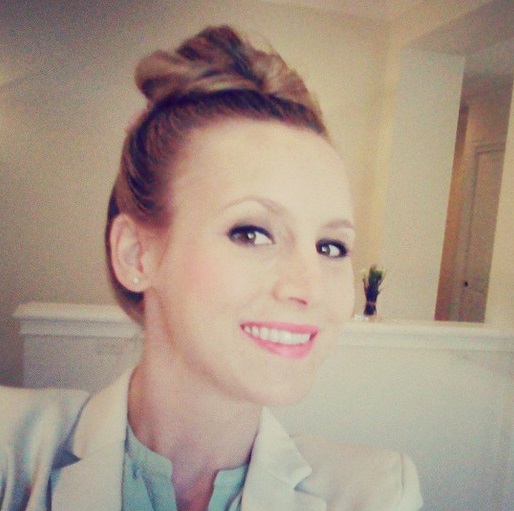
LIsa Black
Cape Coral, FL
Female, 49


I spent the five happiest years of my life in a morgue. As a forensic scientist in the Cleveland coroner’s office I analyzed gunshot residue on hands and clothing, hairs, fibers, paint, glass, DNA, blood and many other forms of trace evidence, as well as crime scenes. Now I'm a certified latent print examiner and CSI for a police department in Florida. I also write a series of forensic suspense novels, turning the day job into fiction. My books have been translated into six languages.
If you page up to the very first question, the answer goes into this in some detail.
Share Answer: 

At it’s most basic, a trajectory is just geometry. If you can find two fixed points then you can draw a straight line between and beyond them.
Share Answer: 
Most people die in their homes, so that's the 'normal' place to find them, but there are plenty of more unusual incidents as well. It's never scary, though, since when I go there I'm surrounded by cops, EMS workers, possibly firemen, Medical Examiner staff etc. I always observe the body where it is found, since that is my job. The Medical Examiner's or Coroner's office staff examines the body at their lab, so they can choose to come to the scene or not. If the death appears to be straightforward and natural, they will often not come to the scene and simply have the body transported to them.
Share Answer: 
She should try to get an internship with a local agency--city, county, state police or medical examiner's. Practical experience will count for a lot. However much depends on what kind of forensic scientist she wants to be--does she want to do crime scene work, in which case most of the training is on the job, or does she want to work in a lab, in which case she'll probably need at least a BA in biology or chemistry. She can check forensic organization websites and government websites for job vacancy postings to get an idea of what the job requirements are. She might also check out entry level positions. At our department we have PSA--Public Service Aides, a paid position that's basically a step between community volunteers and sworn officers. They do more cop-type things, but will make contacts and learn a lot. They do things like direct traffic at accident scenes, take burglary reports and process scenes for fingerprints. She might also want to consider that forensic positions involving crime scene work often have unpredictable hours and sometimes overtime, which might be difficult to juggle with child care arrangements.
Share Answer: 
REALTOR®
 What's the best way to know if housing prices are going to rise or fall?
Flight Attendant
 How do you handle belligerent passengers?
CPR Trainer
 Just how effective is the Heimlich, really?
That depends on what you want to do. Call labs that you're interested in working for or peruse job opportunities postings at the major forensic organizations websites and see what they require.
Share Answer: 
I would guess in his lap or to his right, but it's impossible to know for sure, since you cannot know exactly how the body was positioned or how powerful the load of the bullet might have been.
Share Answer: 
Oh, sorry, for some reason I thought you meant that the guy had done it himself. In that case it is quite possible of course. The scene would be very bloody, of course, with all those injuries. The bodies would bleed out but probably more from gravity than from the heart pumping because they would have died so quickly. (At least I’m assuming the attack was over quickly.) The heart is about the size of the person’s fist and, obviously, would be blood covered after removal. A brain is grayish white and convoluted and other than some blood smears would look fairly neat, if the entire thing was removed carefully as one would at an autopsy. The killer would need a scraping tool and the expertise to do that. Otherwise it would probably look pretty mangled, but still largely a grayish white color.Hope that helps!
Share Answer: 
-OR-
 Login with Facebook
 (max 20 characters - letters, numbers, and underscores only. Note that your username is private, and you have the option to choose an alias when asking questions or hosting a Q&A.)
(A valid e-mail address is required. Your e-mail will not be shared with anyone.)
(min 5 characters)
By checking this box, you acknowledge that you have read and agree to Jobstr.com’s Terms and Privacy Policy.
-OR-
Register with Facebook(Don't worry: you'll be able to choose an alias when asking questions or hosting a Q&A.)



 Browse Jobs
 Host a Q&A
 Search

 Submit Your Question
 Host a Q&A
 Last 7

